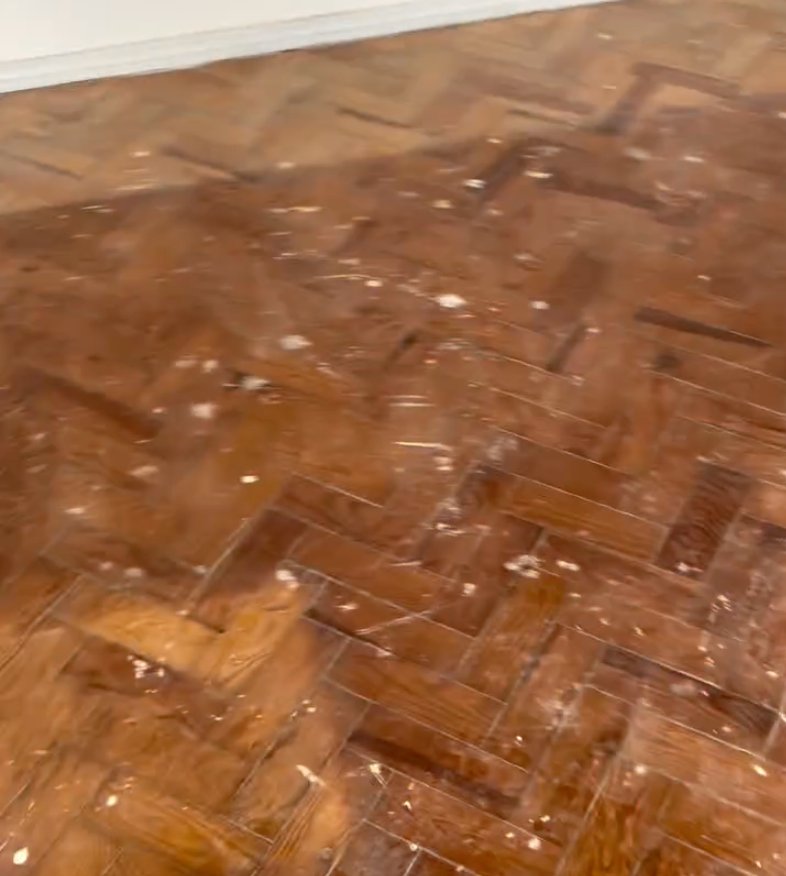
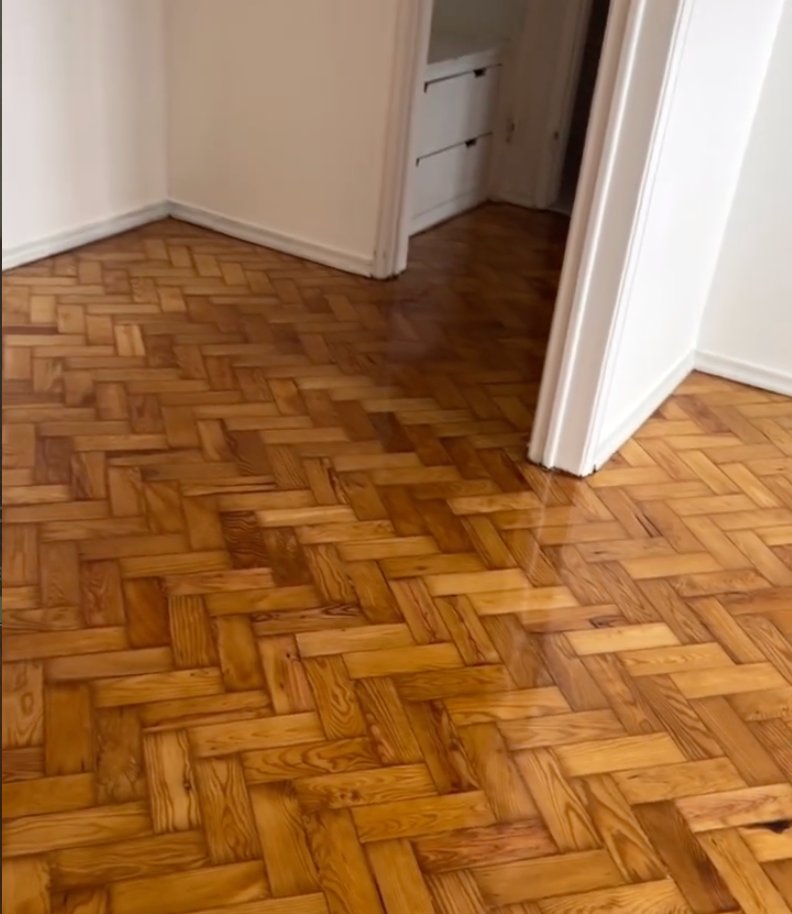
Three kinds of scratches — and how each is repaired
Not all scratches are equal. The right repair depends on whether the scratch lives in the finish (varnish) or in the wood itself. Here is how to tell them apart.
| Type | How to recognise it | Repair approach |
|---|
| Light surface scratches | Only in the varnish — your fingernail does not catch on them. Visible mainly when light hits at a low angle. | Light buffing of the affected zone and a fresh coat of varnish. Sometimes a wax stick is enough. |
| Deep scratches | Cut through the finish into the wood. Your fingernail catches when you run it across. | Spot sanding, optional stain to match colour, and three coats of varnish blended into the surrounding floor. |
| Gouges and chips | Wood missing or compressed — usually from dropped objects, furniture corners or impact. | Fill with matching wood filler, sand smooth, stain if needed, and refinish. Severe gouges may require full board replacement. |
DIY or call a professional?
It is worth being honest about this: not every scratch needs a professional. For very light surface scratches in a varnished floor, a coloured wax stick from a hardware store, applied carefully and buffed in, can be enough — especially if it is a single mark in a low-visibility area.
Where professional repair makes the difference:
- The scratch catches your fingernail — it has gone into the wood, not just the finish. DIY products will not blend in convincingly.
- Multiple scratches in a visible area (living room, entrance, around a desk). DIY treatments accumulate visible inconsistencies.
- The finish is not a simple varnish — oil-finished floors, stained floors, or older patinated wood all need expert blending.
- You tried DIY and the repair is visible — the visible mark is now harder to fix because the surrounding zone has been altered.
- The damage was caused by water, pet urine or chemical spills — these go deeper than they look and need proper treatment.
Not sure if it's worth a professional? Send us a photo on WhatsApp. If we think you can fix it yourself with a wax stick, we'll tell you so — and we'll tell you which product to buy.
Our scratch repair process
For professional scratch repair, the work is precise but quick — usually completed in half a day to one full day on site.
1. Assessment
We identify whether scratches are in the finish or in the wood, map the affected zones, and determine whether a localised repair is realistic or whether the floor truly needs full refinishing.
2. Spot sanding
The damaged zone is sanded with progressively finer grits until the scratches disappear from the wood. We sand a slightly wider area than the visible damage to allow proper blending.
3. Filling, if needed
Gouges and deep marks are filled with wood filler matched to the species and tone of your floor. Once dry, the filler is sanded flush.
4. Colour matching
If your floor is stained, the repaired zone is stained to match. This is the step where experience matters most — getting the tone right on a 50-year-old patinated parquet is harder than it sounds.
5. Three coats of varnish
The repaired and surrounding zone is varnished in three coats, blended so the boundary disappears. We always buff into a wider area than the repair itself so the edge of the new finish does not show.
6. Inspection
Together, we check the result under different lighting angles. On matt and satin finishes, the repair is usually invisible. On gloss finishes or dark stains, subtle differences in sheen may remain at certain angles — we tell you what to expect before starting, not after.
When scratches mean you need full refinishing
Localised scratch repair works when damage is contained. But there is a tipping point at which a full sand-and-refinish becomes the better answer — both in cost and in finished result. You probably need full refinishing if:
- Scratches are spread across more than one room or a large open area.
- The finish is also worn through in walkways and traffic areas, not just scratched.
- The floor's overall colour is noticeably uneven from sun bleaching or wear.
- You have multiple repairs over the years and they are starting to show as patches.
- You are about to renovate or sell the apartment and want a fully consistent finish.
In those cases, see our hardwood floor refinishing page. We'll tell you honestly when a scratch repair is the right call and when refinishing is.
How much does scratch repair cost?
| Scope | Typical price (excl. VAT) |
|---|
| Small zone — a few scratches in one area | €120 – €250 |
| Larger zone — multiple scratches across one room | €250 – €450 |
| Spot board replacement (severe gouge) | +€80 – €150 per board |
| Full refinishing if damage is widespread | see refinishing prices |
The first visit is free across greater Lisbon. Quotes are fixed in writing before any work starts.
Why our scratch repairs work
- 15 years of blending experience — colour matching on patinated parquet, soalho and stained floors.
- Honest about what's possible — if a DIY wax stick will do, we tell you. If it won't, we explain why.
- Same-week scheduling for small repairs across greater Lisbon.
- Insurance-ready documentation for damage covered by home insurance.
- English, French and Portuguese spoken — comfortable communication for expats.
Frequently asked questions
Can scratches in a hardwood floor be repaired?
Yes. Light surface scratches in the finish can be repaired by buffing and a fresh coat of varnish. Deeper scratches in the wood are spot-sanded, filled and refinished. Only very widespread or deep damage requires a full refinishing.
How do you fix deep scratches in a hardwood floor?
Deep scratches are spot-sanded with progressively finer grits to remove the damage, then the affected zone is stained to match surrounding colour if needed, and finished with three coats of varnish. The repair is blended with a wider buffed area so the boundary disappears.
Can I remove scratches from my wood floor myself?
Light surface scratches in the finish can sometimes be addressed at home with a wax stick or coloured filler. Deeper scratches, and any scratches that catch the light or your fingernail, need professional spot-sanding and refinishing for an invisible result.
When do scratches mean I need a full floor refinishing?
Full refinishing is the right answer when scratches cover most of the floor, when the finish is also worn through in high-traffic areas, or when colour and sheen vary noticeably across rooms. If damage is localised, a spot repair is enough.
How much does scratch repair cost in Lisbon?
Localised scratch repair typically costs €120 to €450 depending on the area, plus €80–€150 per board if full replacement is needed. The first visit is free.
Will the repair be invisible?
On matt and satin varnish finishes, our repairs are usually invisible. On gloss or very dark stains, subtle differences in sheen may remain at certain light angles — we explain what to expect before starting.
How long does a scratch repair take?
Most localised scratch repairs are completed in half a day to one full day on site, plus drying time between varnish coats (24 hours before light traffic).
Do you repair scratches on parquet, herringbone and mosaic floors?
Yes — every type of solid wood floor: Portuguese board floors, herringbone and chevron parquet, mosaic blocks, and engineered wood with a sufficient wear layer.